Operational transparency
What the robot does, what it can’t do, and what it does with what it sees and hears.
 ← All projects
Summer internship, ACM OzCHI 2025
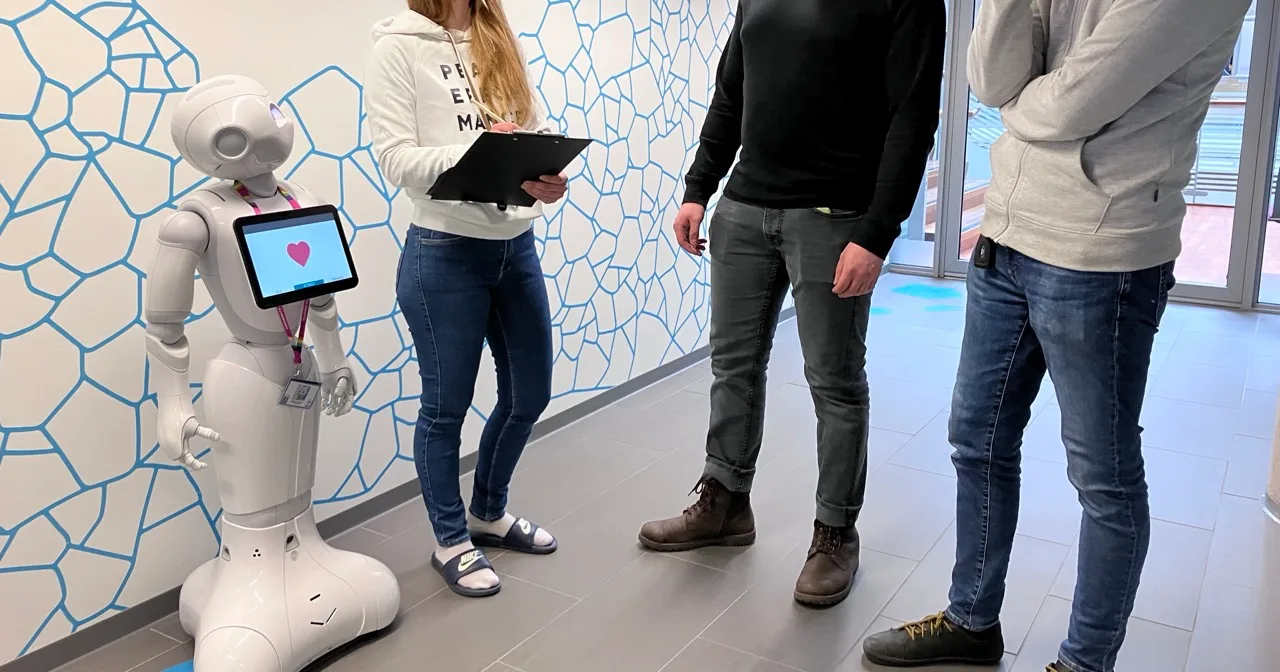
A Pepper robot in the corridors of the University of Oulu, and a study of what students and staff would need before they trusted one on campus.
01 The question
A robot on campus is only useful if people trust it enough to use it. The study asked the people who would be using it what that trust depends on.
02 The study
Attitudes towards social robots, and what people would use one for.
The same ideas again, now with the trust concerns behind them.
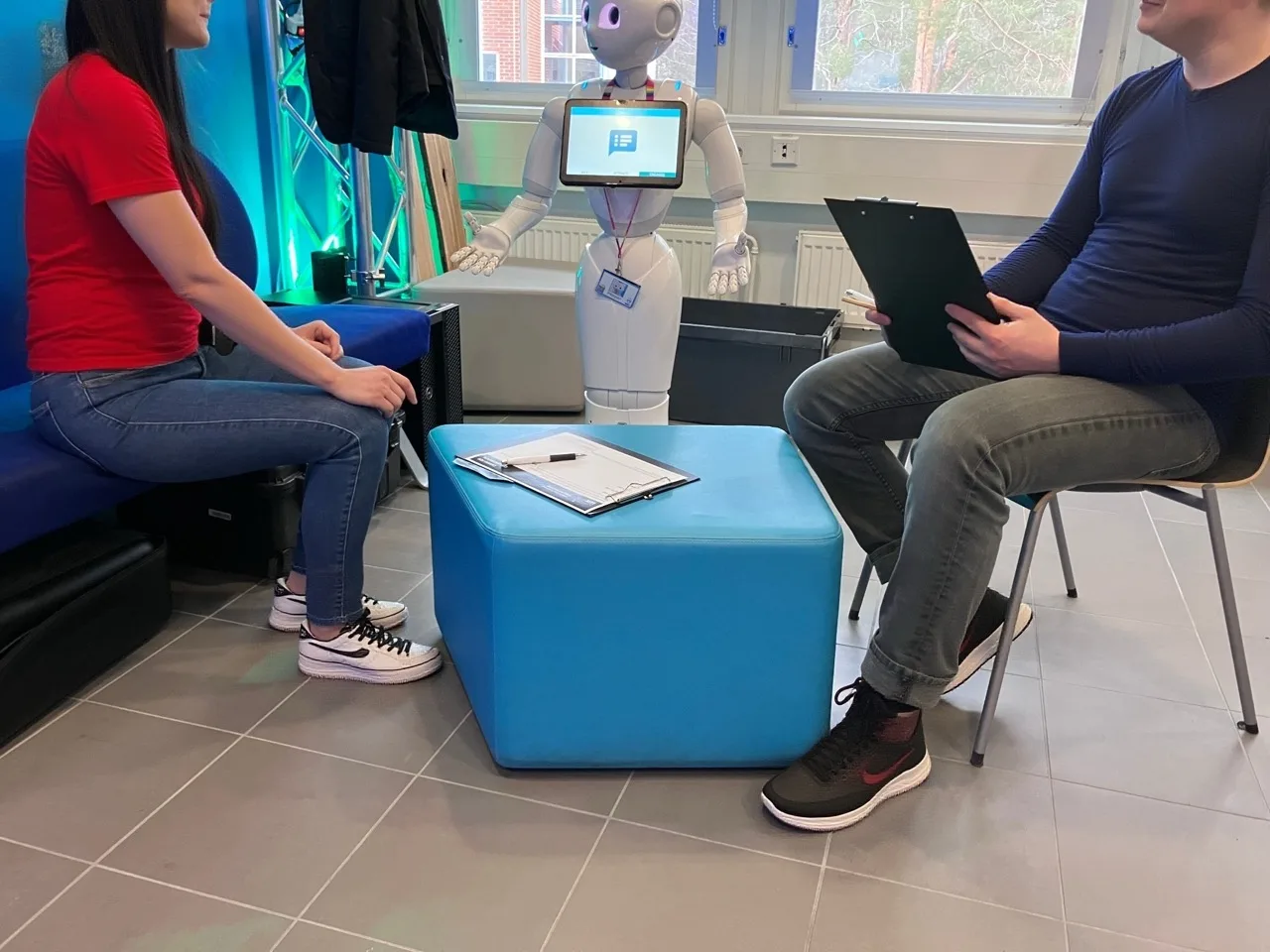
An hour each, on what trust depends on in this particular place.
Pepper was there for both the questionnaires and the interviews. It followed people with its eyes, moved its hands while it spoke, offered five topics on its chest tablet, answered by voice and reacted when its head or hands were touched.
03 What trust depends on
What the robot does, what it can’t do, and what it does with what it sees and hears.
Who is behind it, who answers for it, and who can see the data it collects.
“It is difficult to know who is behind her”P22
“It all depends on the programming in the background”P43
The paper adds these to Hancock et al.’s factors of trust in robots, a model built for robots working in teams, and proposes transparency and security as an eighth characteristic in Baraka et al.’s framework for describing social robots.
04 What people wanted
The most common wish. The campus is large and its buildings look alike.
Answers around the clock when the info desk is closed.
Finding study partners, classmates and staff; translating on the spot.
“Hey, Pepper, what can I do this afternoon at the university?”
Spotting emergencies and following a protocol to raise the alarm.
Someone to talk to, relaxation techniques, stretching breaks.
A photographer, a mascot, the occasional high five.
05 Four questions
If a phone is quicker, the robot loses. It has to be near, fast and fluent.
No noise, no unwanted approaches, no feeling of being watched. There when needed, invisible otherwise.
Not required, but welcome, as long as the fun never gets in the way.
A robot replaces or extends something already there, from notice screens to sign language.
06 My part
I joined the group as a summer intern during my master’s. I helped develop the robot, above all its text-to-speech and its movements, so that it came across as friendlier and more human, and I helped gather the responses. The study was the group’s; I am one of the paper’s eight authors.
Helped develop Pepper’s features for the study, above all its text-to-speech, so it could speak to the people taking part.
Gestures and body movement that made the robot feel more human and easier to approach.
Helped collect the responses the research was built on.
One of eight authors on the ACM OzCHI 2025 paper. Read it (opens in a new tab)
07 The paper
Factors of Trust for Successfully Adopting Social Robots on the Campus
Read the paper ↗ (opens in a new tab)